Normal Resting Heart Rate by Age
Always consult a licensed medical professional about your health.
The short answer: MedlinePlus gives a normal resting heart rate of 60 to 100 beats per minute for adults and children 10 and older, including seniors. Younger children have faster normal rates, up to 190 for newborns. Well-trained athletes can sit at 40 to 60.
Normal resting heart rate by age
These are the ranges MedlinePlus, from the US National Library of Medicine, gives for a resting heart rate:
| Age | Normal resting heart rate (beats per minute) |
|---|---|
| Newborns, 0 to 1 month | 70 to 190 |
| Infants, 1 to 11 months | 80 to 160 |
| Children, 1 to 2 years | 80 to 130 |
| Children, 3 to 4 years | 80 to 120 |
| Children, 5 to 6 years | 75 to 115 |
| Children, 7 to 9 years | 70 to 110 |
| Children 10 and older, and adults (including seniors) | 60 to 100 |
| Well-trained athletes | 40 to 60 |
The ranges get lower and narrower as children grow, and stay the same from age 10 through adulthood.
What “resting” means
A resting heart rate is your pulse when you’ve been sitting or lying still for a while, not after walking, climbing stairs or drinking coffee. To compare readings fairly, take them in the same conditions each time, such as sitting quietly at the same time each morning. Our guide on what your resting heart rate tells you covers the everyday things that push it up.
How to check your pulse
MedlinePlus describes two easy places to find your pulse:
- Wrist: put your index and middle fingers on the underside of the opposite wrist, below the base of the thumb, and press with flat fingers.
- Neck: put the same two fingers just to the side of the Adam’s apple, in the soft hollow. Sit or lie down first, press gently, and never press both sides of the neck at once, because that can cause fainting.
Then count the beats for a full minute, or for 30 seconds and multiply by 2.
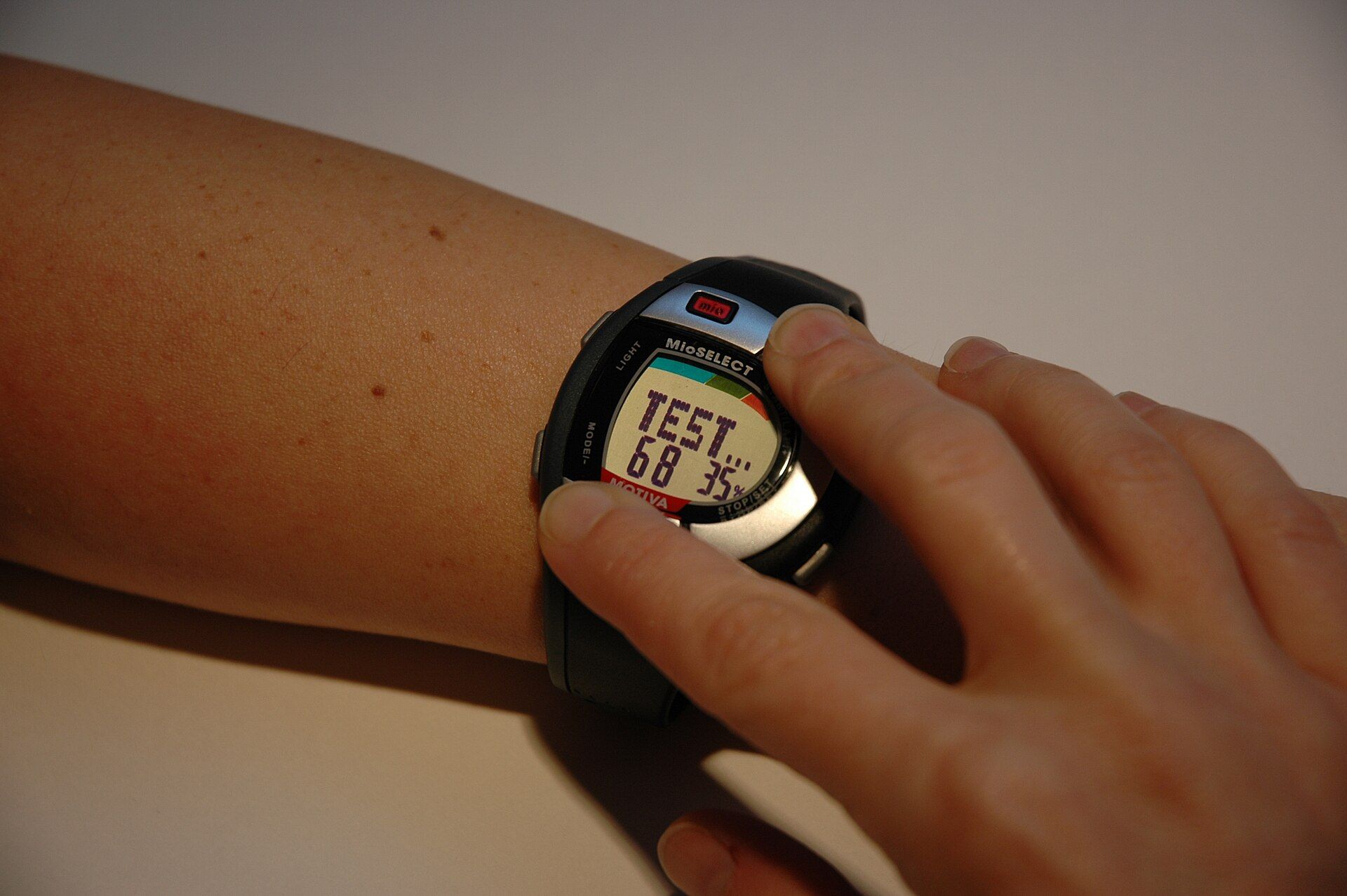
You can also use a watch or monitor. BP Record can check your heart rate with your iPhone’s camera as a wellness estimate (it isn’t a medical measurement), or you can type in a reading, and each one goes on a chart so you can see your trend.
When it’s outside the range
MedlinePlus says resting heart rates that are continually high (tachycardia), or below the normal values (bradycardia), are worth talking to your health care provider about, as is an irregular pulse. Only your doctor can say what your own numbers mean.
Frequently asked questions
What is a normal resting heart rate for adults?
MedlinePlus gives 60 to 100 beats per minute for children 10 years and older and adults, including older adults. Well-trained athletes can be 40 to 60.
What is a normal resting heart rate for a child?
It depends on age. MedlinePlus gives 80 to 130 beats per minute at 1 to 2 years, 80 to 120 at 3 to 4 years, 75 to 115 at 5 to 6 years, and 70 to 110 at 7 to 9 years.
Does the normal resting heart rate change for older adults?
MedlinePlus uses the same range, 60 to 100 beats per minute, for adults including seniors.
What if my resting heart rate is outside the normal range?
MedlinePlus says resting heart rates that are continually high, or below the normal values, are worth talking to your health care provider about.
Sources
This guide is general information, not medical advice, and isn’t reviewed by a doctor. Its facts come from the sources above. Always consult a licensed medical professional about your health. How we write our guides · Disclaimer.